
How to Budget for Your Floor Coating Project
Understanding the Costs Involved in Floor Coating
The journey into a floor coating project begins with a comprehensive understanding of the associated costs. These costs span far more than just the initial purchase of materials; elements like labor, prep work, and post-installation maintenance can significantly inflate the project’s overall expenses. It’s also vital to account for unforeseen expenditures that may arise, ensuring that your floor coating project doesn’t break the bank in the process.
Among the primary cost determinants in any floor coating project, the choice of coating type stands out. Different types can vary widely in price, depending on factors such as their durability, aesthetics, and suitability for the intended use. Similarly, the scale of your project will impact costs, with larger areas commanding higher prices due to the increased material and labor needed. Having a clear understanding of these elements will form a crucial foundation in planning your floor coating budget plan.
Choosing the Right Type of Floor Coating
When embarking on a floor coating project, a pivotal decision that affects overall cost is the type of floor coating to use. This choice greatly differs depending on the structure and function of the space that needs coating. Residential spaces might lean towards aesthetics and comfort, opting for epoxy or polyurethane coatings. Commercial spaces, on the other hand, may prioritize durability and ease of maintenance, making cementitious urethane or quartz-filled polyaspartic coatings more suitable.
Deciding on the right kind of floor coating also involves considering the pros and cons of each option. Epoxy coatings, for instance, impress with their wide range of colors and designs, resistance to chemicals, and durability. However, their susceptibility to UV damage could be a drawback. Cementitious urethane coatings are praised for their resistance to heat and aggressive chemicals, but they require expert application to guarantee optimal results. Balancing such factors ensures you get the most value for your money while securing a floor coating that meets your specific needs.
Evaluating the Size and Scope of Your Project
When starting a floor coating project, one of the first crucial steps is to accurately determine the project’s extent. The project’s size directly influences the needed quantity of coating materials, the amount of labor required, and, ultimately, the overall project cost. On a smaller scale, single rooms or sections of a house will require significantly less time and resources, compared to large-scale commercial projects or full-house renovations, which demand higher budgets and more planning.
A comprehensive evaluation of the project’s scope should also consider the current floor condition. For instance, if the existing surface contains imperfections—such as cracks, unevenness, or deep stains—these will likely require additional preparatory work before the coating process can commence. Understanding these factors will assist proper planning, giving a more accurate estimate of cost and time, hence, preventing unwanted surprises as the project progresses.
Estimating Labor Costs for Floor Coating
One of the significant components in budgeting your floor coating project comprehensively is understanding labor costs. This expense typically arises if you decide to hire a professional to do the job rather than opting for a DIY approach. Labor costs could be determined on an hourly or a per square foot basis, largely dependent on the professional or firm you opt to work with.
The complexity and scope of your floor coating task significantly influence labor cost as well. Intricate designs or the need for additional preparation work, such as repairing cracks, could exponentially spike the overall estimate. It is advisable to obtain multiple quotes from different contractors. This practice not only gives you a better understanding of the labor costs involved but also helps you make an informed decision aligned to your budget constraints.
Consideration of Material Costs
A significant cost that contributes largely to your overall floor coating budget is the price of the materials required. The choice of material can highly alter the cost estimate as it varies greatly based on type, brand, and quality. For instance, epoxy, a popular floor coating material, can range from a mere couple of dollars to several hundred per gallon. Some materials like polycuramine and polyurea are also high-end choices that bring exceptionally durable results, but they come at a premium price.
On the other hand, more budget-friendly materials such as urethane and acrylic can still deliver a robust finish, though perhaps not with the same longevity or high-end appearance as their more expensive counterparts. In making the decision, it is important to factor in the aspect of durability, maintenance demands, and longevity in comparison to cost. When budgeting, remember that going for lower-priced materials might risk the quality and durability of your floor coating, leading to more frequent repairs and replacements in the future.
Planning for Unforeseen Expenses
In every floor coating project, it’s inevitable that unforeseen expenses will arise. These unexpected costs may stem from a variety of sources such as product mishaps, underestimated project scope, or even problems with the current floor’s surface that were not initially apparent. Unexpected expenses can also crop up if there are additional prep work requirements, equipment malfunctions, or if any special tools are needed for the job. It is, therefore, wise to allocate a percentage of your budget towards these unexpected occurrences to prevent breaching your total project cost.
In setting aside a safety net fund, consider the complexity and size of the project, as well as the type of flooring material used. The more complex the project, the more margin for inaccuracy in the initial cost estimate and higher likelihood for unexpected costs. Dealings with high-end materials also generally come with a high risk of unforeseen costs, due to their specific handling and installation requirements. Therefore, a contingency budget of around 10-20% of the total project cost is advisable for mostfloor coating projects. Budget planning also allows for a smoother project flow, reducing potential stress from financial issues mid-project. This ensures that even in the face of unexpected expenses, your project won’t come to an abrupt halt, but instead can continue towards completion. • It’s important to note that unexpected expenses are a common part of any floor coating project. These can arise from various sources such as product mishaps, underestimated project scope or unseen problems with the existing floor surface.
• Additional prep work requirements, equipment malfunctions or need for special tools can also lead to unforeseen costs. Hence, it is prudent to allocate a percentage of your budget towards these unpredictable occurrences to avoid overshooting your total project cost.
• When planning for a safety net fund, take into account the complexity and size of the project as well as the type of flooring material used. Complex projects offer more room for inaccuracies in initial cost estimates and thus have higher chances of unexpected costs.
• Working with high-end materials generally carries a higher risk of unforeseen costs due to their specific handling and installation requirements. Therefore, setting aside around 10-20% of the total project cost as contingency budget is recommended for most floor coating projects.
• Budget planning not only helps in managing finances but also ensures smoother flow of the project by reducing potential stress arising from financial issues mid-project. This guarantees that even if there are unexpected expenses, your project won’t come to an abrupt stop but will continue towards completion instead.
Remember: While it may seem like an extra burden initially, having a contingency plan in place can save you from major headaches down the line when dealing with unforeseen expenses during your floor coating projects!
Calculating the Cost of Prep Work
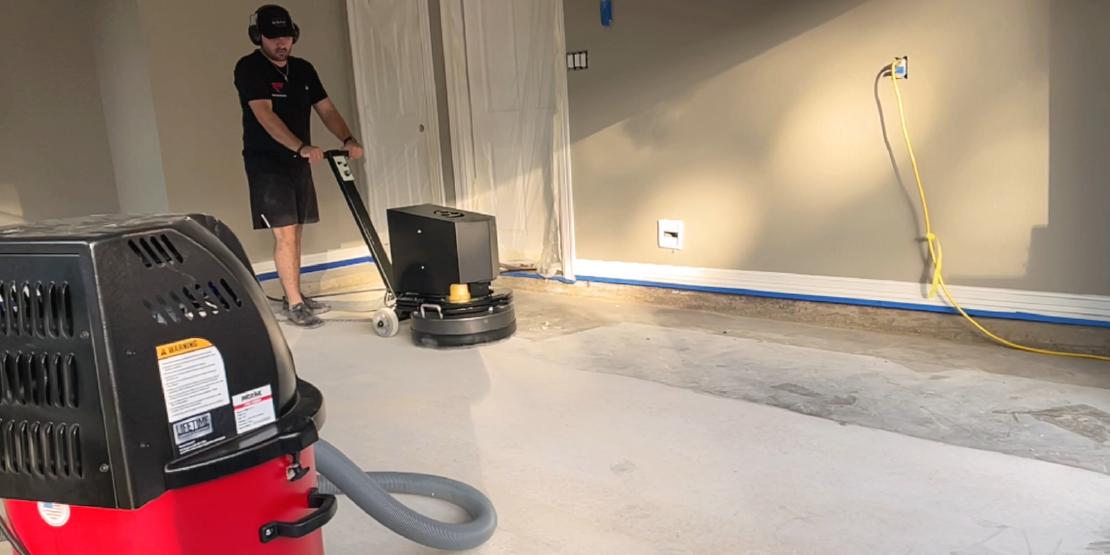
Before you initiate your floor coating project, it is crucial to factor in the cost of preparation work. This phase usually involves the removal of existing flooring, levelling of surfaces, application of primer, and making any necessary repairs. These tasks are crucial to achieving a high-quality finish and longevity of your new floor coating. These must not be overlooked when delineating your project budget as they often require specialized tools and expertise, incurring additional costs.
The costs for preparing the surface can be variable, depending much on the state of the current floor. If the floor is damaged, cracked, or uneven, the cost of preparation could escalate due to extra labour and materials required for repairs. Materials commonly used in the preparation phase include concrete fillers, grinding tools, cleaning solutions, and sealers. In addition, renting or buying specialized equipment, such as concrete grinders and industrial-level vacuums, may be necessary. Ideally, consulting with a flooring professional can provide a more accurate estimation and ensure that your budget covers all these crucial preparation steps.
Allocating Funds for Post-Installation Maintenance
Careful attention to the lifecycle of your floor coating project allows for a precise budget. A critical component of this lifecycle budgeting is post-installation maintenance. This cost goes beyond the initial outlay for materials and labor and should be planned for at the outset. It’s not just a one-time expense but an ongoing one, as your floor will need routine cleaning, sealing, and possible repair over time.
There are numerous factors to consider when allocating funds for these post-installation costs. One vital consideration is the type of floor coating you choose. Some types might require specialized cleaning agents or procedures, adding to the overall expense. High-traffic floors could face more wear and tear, necessitating frequent repair and increased maintenance costs. Therefore, the budget must be flexible enough to allow for these variables.
Incorporating the Cost of Tools and Equipment
When embarking on a floor coating project, one critical component to consider is the expense tied to the required tools and equipment. These can vary significantly based on the type of coating you’ve selected and your project’s complexity. Some common equipment necessary for such projects may include coating mixers, brushes, rollers, and commercial-grade sprayers. More specialized tools such as concrete grinders and shot blasters may be necessary for the preparation of the surface. Renting such highly specialized equipment can add up quickly, so planning for this expense is vital.
Equipment costs can also escalate if you need to purchase personal protective equipment (PPE). PPE may include respirators, safety glasses, gloves, and more, depending on the materials you are working with. Furthermore, remember that each piece of equipment, whether rented or purchased, will add to your total project cost. Therefore, it is essential to understand which tools will be needed and to include such costs in your overarching budget plan. Consequently, proper evaluation of equipment and tools costs forms a significant part of the overall budgeting for the project.
The Role of Professional Consultation Fees in Your Budget
Professional consultation fees stand as an integral component of your overall floor coating budget. These costs account for the rich expertise brought to the table by professionals who help in determining the right type of coating for your floors, ensuring durability, aesthetics, and value for money. They also assist in providing an accurate measure of the scope of work, and in efficiently planning and managing the project to avoid costly miscalculations or oversights.
Of significant note is the fact that these fees can vary widely depending on the complexity of the project, the reputation of the consultant, and the geographical location. Allocating a considerable amount for consultation fees might seem superfluous initially. Still, considering the long-term benefits of their expertise in avoiding costly missteps, the expense is often justified. These experts’ insights are essential in tailoring a budget that matches the project’s needs and your financial capabilities.
Price Comparison: DIY vs Hiring a Professional
When considering a floor coating project, one significant decision you will need to make is whether to do it yourself (DIY) or hire a professional. Be aware that both choices come with their unique financial implications. A DIY approach might initially appear to be a cost-saving strategy. You likely only consider the cost of materials and maybe a few tools. However, once you factor in the time, effort, and potential mistakes that could lead to substandard results or even more expenses, the scenario changes significantly.
On the other hand, hiring a professional carries its financial burden. While professional fees might be higher compared to the cost of buying materials for a DIY project, you’re paying not merely for the time spent on the job. Keep in mind that you are also paying for the expertise, guarantees, correct tools, overall reliability, and peace of mind. Professionals know the ins and outs of the floor coating process, and hiring a professional equates to purchasing a solution, not just a service.
Money-saving Tips for Your Floor Coating Project
Saving on your floor coating project need not compromise the quality if planned and executed correctly. The first rule in cutting down costs is doing adequate research. Identifying the right type of floor coating aligns with the usage and the aesthetic of the space. Differentiating between a variety of products available on the market will prevent overspending, yet ensure the optimal choice for your project.
Taking on the preparation work by yourself, such as cleaning the floor, fixing cracks, and removing any old coatings, can significantly cut down professional labor costs. Proper preparation of floors ensures longevity and durability of the coating, saving you from incurring repeated expenditure. Moreover, buying materials in bulk or during sales will shave a decent percentage off the total cost. Be mindful about proper storing conditions to prevent deterioration of bulk materials.
Revise and Finalize Your Floor Coating Budget Plan
Once you’ve gathered all the necessary information and done your calculations, the next significant step is to revise your floor coating budget. This entails scrutinizing every detail, ensuring that all expenses have been accounted for, and checking for potential areas where you could cut costs without compromising the quality of the project. It’s also during this stage that you can make adjustments or amendments based on new information or changes in your project needs. That could mean deciding to opt for a cheaper coating material or choosing to do some parts of the installation yourself to save on labor costs.
Upon finalization, it’s important to stick to your floor coating budget plan as much as possible. Avoid making unnecessary changes that could elevate the project costs beyond the set limit. Remember, the goal of having a budget is not just to keep expenses under control but also to ensure the efficiency and smooth flow of the project. It also helps you avoid unnecessary financial stress that may emanate from unplanned or sudden expenses. At this point, having a contingency fund incorporated into your budget could be a lifesaver, providing for any unforeseen expenses during the course of your floor coating project.
What are the primary costs involved in a floor coating project?
The primary costs typically include the cost of materials, labor, tools and equipment, preparation work, post-installation maintenance, and professional consultation fees.
How can I choose the right type of floor coating?
The right type of floor coating largely depends on the specific requirements of your project. Consider factors such as the material of the current floor, the environment in which the floor is located, and the intended use of the floor.
How does the size and scope of my project impact the overall budget?
The larger your project, the more materials, labor, and time you will need. Therefore, a larger scope often leads to a higher overall cost.
How can I estimate the labor costs for my floor coating project?
Labor costs can be estimated based on the current market rates for floor coating professionals in your area. You may also need to account for the complexity of your project, as more complicated jobs may require more specialized labor.
What are the potential unforeseen expenses I should prepare for?
Potential unforeseen expenses may include additional prep work, repairs for any unexpected damage found during the project, or additional materials needed due to miscalculations.
What are the costs associated with prep work?
The cost of prep work may include cleaning the surface, removing old coatings or materials, repairing any damage, and priming the surface for the new coating.
Why is it important to budget for post-installation maintenance?
Post-installation maintenance is essential to ensure the longevity of the floor coating. This may include regular cleaning, sealing, or re-coating, all of which should be accounted for in your budget.
How do professional consultation fees factor into my budget?
Professional consultation fees can provide valuable expert advice on the best materials, techniques, and maintenance practices for your project, but will add to the overall cost.
Is it cheaper to do the project myself or hire a professional?
While doing the project yourself can save on labor costs, you should also consider the cost of your own time, the potential need for specialized tools or equipment, and the possibility of errors due to lack of experience.
Can you share any money-saving tips for my floor coating project?
Yes, there are several ways to save money on your project. For instance, you can do some of the prep work yourself, choose a more affordable but still durable coating material, or shop around for the best prices on materials and labor.
What should be my final steps in finalizing my floor coating budget plan?
The final steps should include a thorough review of all costs, a consideration of potential unforeseen expenses, and a final comparison of your estimated costs with your available funds. Make adjustments as needed to ensure you stay within your budget.